






Blog 
How to Choose a Carbide Furnace in 2026?
Choosing a Carbide Furnace in 2026 demands more than comparing purchase prices. The right decision affects production stability, energy use, maintenance costs, and workplace safety. A furnace may look efficient on paper, yet perform differently under local raw materials, power conditions, and operating schedules.
This guide introduces the practical criteria used by experienced plant managers and process engineers. It examines furnace capacity, electrode control, refractory durability, automation, emissions management, and service support. It also considers whether the supplier provides traceable test data, clear warranty terms, installation guidance, and training for operators. These details matter when a single unplanned shutdown can leave cooled material inside the chamber and delay production for hours.
Numbers still need careful questioning. A quoted energy figure may reflect ideal feedstock and laboratory conditions. Real plants face moisture changes, voltage fluctuations, dust buildup, and uneven maintenance. No model is perfect. That is easy to forget during a sales presentation. Buyers should request site-specific references, independent inspections, and performance evidence from comparable installations. Local electrical rules and recognized industrial safety standards must guide the final design.
The following sections will help readers compare technologies without chasing fashionable features. They will connect technical specifications with daily operating realities. A lower initial price may become expensive after repeated electrode changes or difficult repairs. Conversely, advanced controls may not justify their cost in a small facility. The best choice is a documented, serviceable, and legally compliant solution that matches the plant’s actual goals.
What Is a Carbide Furnace and How Does It Work?
How to Choose a Carbide Furnace in 2026?
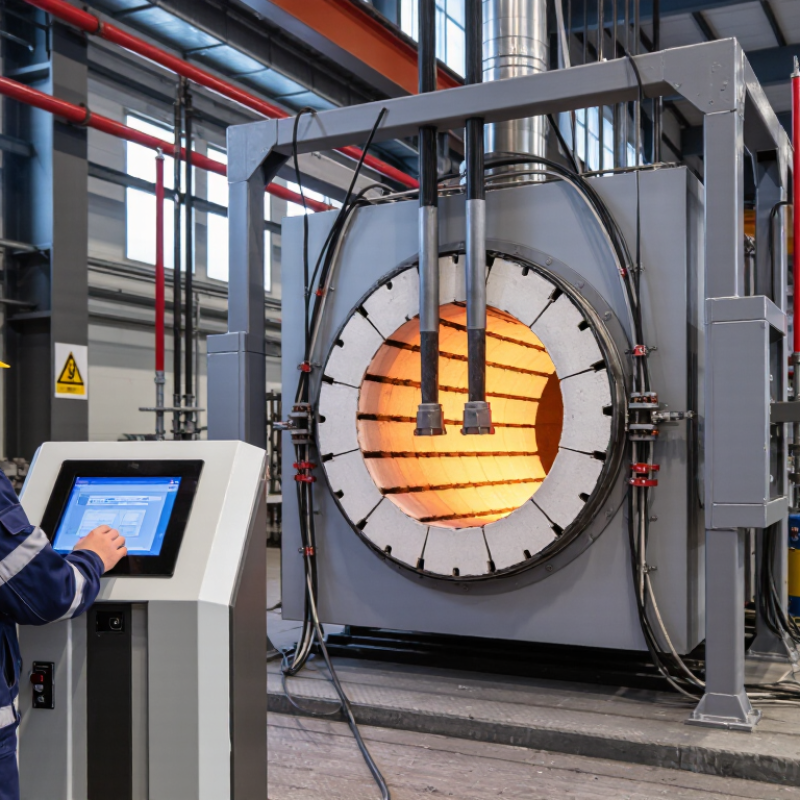
A carbide furnace is an industrial electric arc furnace that produces calcium carbide from lime and carbon. Inside, electrodes create intense heat, often near 2,000°C. The heat melts the charge and drives the reaction: calcium oxide combines with carbon to form calcium carbide and carbon monoxide. The material is tapped as a hot, dark melt, then cooled, crushed, and screened.
A reliable furnace needs stable electrode control, strong refractory lining, and accurate temperature monitoring. Its design should also support efficient charging and safe gas handling. Watch the details. Uneven feeding can create cold zones, while poor electrode control may increase energy use and damage the lining. In practical evaluations, operators should inspect tapping access, cooling systems, maintenance space, and emergency shutdown functions. Energy performance matters, but the cheapest furnace may become expensive after repeated repairs. I have found that specifications can look impressive yet hide difficult maintenance work. That deserves careful questioning.
Tips: Ask for measured power consumption, lining life, electrode movement accuracy, and service records from comparable installations. Check whether sensors remain reliable under dust, heat, and vibration. Confirm that ventilation and gas-monitoring systems match local industrial requirements. A small test run can reveal more than a polished brochure. Do not ignore operator feedback. They notice problems engineers sometimes miss.
How to Choose a Carbide Furnace in 2026? - What Is a Carbide Furnace and How Does It Work?
| Evaluation Dimension | Typical Technical Data | How It Works / Why It Matters | Recommended Selection Guideline |
|---|---|---|---|
| Definition | An industrial furnace used to produce, heat-treat, sinter, or melt carbide materials. | It converts electrical energy into controlled heat, allowing carbon-containing materials and metal compounds to react or densify. | First identify whether the application is calcium carbide production, cemented-carbide sintering, powder processing, or another high-temperature process. |
| Primary Furnace Category | Submerged-arc furnace: commonly used for calcium carbide production. Vacuum sintering furnace: commonly used for cemented-carbide parts. Resistance or graphite-heating furnace: used for controlled laboratory and production heat treatment. | Different furnace designs provide different atmospheres, heating rates, temperature uniformity, pressure levels, and material-handling methods. | Do not select a furnace by maximum temperature alone; match the furnace type to the chemical reaction and final product requirements. |
| Heating Principle | Electric arc, electrical resistance, graphite heating elements, or induction heating, depending on furnace design. | Electrical power is transformed into heat directly through an arc, a resistive element, or electromagnetic induction. | Choose arc heating for very high-temperature bulk reactions; choose resistance or graphite heating for tighter temperature control and smaller or precision loads. |
| Typical Operating Temperature | Calcium carbide production: approximately 1,800–2,200°C in the reaction zone. Cemented-carbide vacuum sintering: commonly approximately 1,350–1,600°C, depending on grade and binder system. Other carbide heat treatments: process-specific. | Temperature controls reaction completion, liquid-phase formation, densification, grain growth, and product quality. | Select a rated temperature at least 100–200°C above the required working temperature, while confirming actual temperature uniformity at the load. |
| Atmosphere and Pressure | Submerged-arc furnaces operate with a burden and reaction atmosphere; sintering furnaces may use vacuum, hydrogen, nitrogen, argon, or controlled gas mixtures. | Atmosphere prevents unwanted oxidation and controls decarburization, carburization, binder behavior, and volatile removal. | Specify the required vacuum level, gas purity, gas flow, leak rate, and pressure-control accuracy before requesting quotations. |
| Heating Uniformity | Precision sintering systems may target a working-zone uniformity of approximately ±5–10°C, subject to load arrangement and test method. | Uniform heating reduces dimensional variation, residual stress, abnormal grain growth, and differences in density or hardness. | Ask for a temperature-uniformity test using a representative load rather than relying only on an empty-chamber specification. |
| Production Mode | Batch furnaces are common for cemented-carbide parts; continuous or semi-continuous systems are used where throughput and repetitive production are priorities. | Batch systems provide flexibility, while continuous systems can reduce handling and improve line productivity. | Choose batch operation for multiple product sizes and frequent recipe changes; choose continuous operation for stable, high-volume production. |
| Capacity and Useful Load | Capacity should be stated by useful load mass or working volume, not only by chamber dimensions. Typical production systems range from laboratory-scale loads to several tonnes. | The usable load is lower than the total chamber volume because space is required for heating zones, insulation, gas circulation, and thermal expansion. | Size the furnace for the required batch weight, product geometry, packing density, and future capacity—not merely the current average load. |
| Energy Requirement | Electrical demand varies widely with furnace type, temperature, insulation, batch mass, cycle time, and material reaction. Calcium carbide arc furnaces generally require substantially higher power than laboratory or sintering furnaces. | Energy is consumed by heating the charge, furnace structure, electrodes or elements, cooling systems, and exhaust or vacuum equipment. | Request measured energy consumption per kilogram or per batch under defined operating conditions, including standby and cooling loads. |
| Control System | Typical controls include programmable recipes, thermocouples or optical pyrometers, power regulation, vacuum control, gas-flow control, data logging, and alarm management. | Closed-loop control maintains the programmed thermal profile and records process conditions for traceability. | Prioritize recipe permissions, event logging, independent over-temperature protection, remote diagnostics, and exportable process data. |
| Cooling System | Water-cooled jackets, electrodes, cables, and furnace components are common in high-power systems. Gas cooling may also be used in controlled-atmosphere furnaces. | Cooling protects structural parts and electrical components from thermal damage and stabilizes the process. | Check cooling-water flow, pressure, temperature, filtration, redundancy, leak detection, and required water quality. |
| Materials and Internal Components | Common materials include graphite, refractory ceramics, carbon-based insulation, high-temperature alloys, molybdenum, tungsten, and water-cooled copper components. | Component selection affects contamination risk, service life, maximum temperature, thermal conductivity, and compatibility with the process atmosphere. | Confirm chemical compatibility and contamination limits, especially when processing oxygen-sensitive powders or high-purity carbide materials. |
| Safety and Emissions | Required safeguards may include interlocks, emergency power isolation, door protection, gas monitoring, ventilation, dust collection, and process-gas or carbon-monoxide monitoring where applicable. | Carbide processes can involve extreme heat, electrical hazards, reactive powders, toxic or flammable gases, and hot particulate emissions. | Evaluate the complete installation against applicable local electrical, pressure, ventilation, occupational-safety, and environmental requirements. |
| Maintenance Requirements | Routine work may include inspection of heating elements or electrodes, seals, insulation, thermocouples, vacuum pumps, cooling circuits, filters, and refractory linings. | Wear, thermal cycling, dust, chemical attack, and leaks can gradually reduce efficiency and process stability. | Compare replacement intervals, spare-part availability, maintenance access, service response, and the cost of planned downtime. |
| Best Fit by Application | Calcium carbide: high-power submerged-arc furnace. Cemented-carbide parts: vacuum or controlled-atmosphere sintering furnace. Research and small batches: laboratory resistance or graphite-heating furnace. | The correct match improves reaction efficiency, product consistency, operating safety, and total cost of ownership. | Define the feedstock, product dimensions, target density or composition, batch size, cycle time, atmosphere, and annual operating hours before final selection. |
| 2026 Purchasing Checklist | Confirm working temperature, useful load, heating rate, temperature uniformity, atmosphere, pressure range, power demand, cooling requirements, emissions controls, automation, and validation documentation. | A complete technical specification prevents under-sizing, unexpected utility costs, material contamination, and production bottlenecks. | Compare suppliers using the same test load and acceptance criteria, and evaluate total cost of ownership rather than purchase price alone. |
Note: Temperature ranges and performance values are typical industry ranges. Actual requirements depend on carbide chemistry, product geometry, furnace configuration, loading method, atmosphere, and the validated process recipe.