







Blog icon

How to Choose Plastic Tubing for Global Sourcing in 2026?

How to Choose Plastic Tubing for Global Sourcing in 2026?

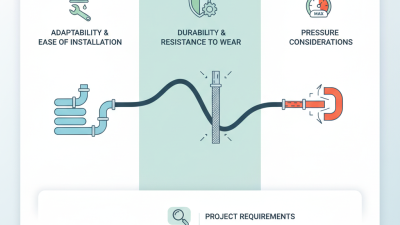
Selecting plastic tubing for global sourcing requires more than comparing price lists. A tube may look identical across suppliers, yet perform differently under pressure, heat, chemicals, or repeated bending. Material choice matters. Polyurethane offers flexibility, while nylon provides stronger dimensional stability. PTFE resists aggressive chemicals, but it may increase cost and complicate processing. The application must lead the decision.

Plastic-tubing specialist Michael J. McGowan states, “The right tube is selected by the system, not by the catalog.” This principle remains valuable in 2026. Buyers should define inner diameter, wall thickness, burst pressure, temperature range, transparency, hardness, and connection method. A sample should run through the real assembly, not only a laboratory check. Watch for kinking near fittings. Measure flow after several bending cycles. Small details often become expensive failures.

Global sourcing adds another layer of risk. Supplier capability, production consistency, packaging quality, and traceability deserve careful review. Ask for batch records, material declarations, inspection data, and realistic lead times. Confirm whether the supplier can maintain the same resin grade during market shortages. It sounds basic. It is often missed.

No sourcing plan is perfect. Forecasts change, freight delays happen, and a low-cost tube can create hidden waste. A thoughtful comparison should include tooling, rejected parts, freight, testing, and replacement costs. This guide examines those decisions with practical criteria, technical checks, and a willingness to question convenient assumptions. Reliability begins before the purchase order.
How to Choose Plastic Tubing for Global Sourcing in 2026?

Map Fluid, Pressure, and Temperature Needs to ASTM D380 Test Data

How to Choose Plastic Tubing for Global Sourcing in 2026?

Selecting plastic tubing starts with the fluid, pressure, and temperature profile. Record the fluid concentration, operating time, and cleaning chemicals. Then compare these details with available ASTM D380 test data. ASTM D380 primarily addresses rubber hose, so it should guide evaluation, not replace plastic-specific qualification. Check whether the report states test pressure, burst pressure, dimensions, temperature, and conditioning time. A single burst result is not enough.

Tips: Ask for lot-specific reports, not only catalog values. Confirm units and test temperatures. Request samples for fluid immersion testing. Examine the tube after exposure. Look for swelling, whitening, cracking, or reduced flexibility. These small changes often predict larger failures.

Pressure data must reflect real service. A tube handling steady pressure may face pulses during valve closure or pump startup. Compare working, proof, and burst values with a suitable safety margin. Temperature needs similar care. Continuous heat, short spikes, and repeated cooling can produce different results. ASTM D380 evidence may reveal aging or pressure behavior, but it may not capture every plastic failure mode. I would also verify wall thickness, bend radius, fittings, and permeation performance. This step is easy to overlook. Supplier declarations should include material traceability, test dates, laboratory methods, and sample conditioning. If those details are missing, the comparison remains incomplete.

How to Choose Plastic Tubing for Global Sourcing in 2026?

Map fluid compatibility, pressure, and temperature requirements to supplier-reported test data before approving a tubing specification.

How to use this screen: Select a material that exceeds the actual fluid, pressure, and temperature requirements, then verify dimensional stability, permeability, vacuum resistance, proof pressure, burst pressure, and fluid compatibility using the supplier’s test report. ASTM D380 provides test methods primarily for rubber hose and does not define universal pressure or temperature ratings for every plastic tube; ratings depend on material grade, wall thickness, reinforcement, dimensions, fluid, and test conditions. The values shown are representative engineering screening values, not standard limits or brand-specific data.

Match Polymer Choices to FDA 21 CFR 177 and ISO 10993 Requirements

How to Choose Plastic Tubing for Global Sourcing in 2026?

Global sourcing in 2026 starts with compliance, not only price. For tubing used with food, medicines, or patient fluids, polymer selection must match its application. FDA 21 CFR 177 identifies permitted substances and conditions for food-contact use. It does not automatically prove medical-device biocompatibility. ISO 10993 requires a risk-based biological evaluation. Contact type, duration, sterilization, and patient exposure all matter. This distinction is often missed.

Industry data also supports stronger supplier checks. Grand View Research’s 2024 medical tubing analysis estimated the global market at roughly USD 5 billion in 2023. It forecast continued growth through 2030, driven by minimally invasive procedures and home care. Market estimates vary because report scopes differ. That is worth questioning.

A polyolefin may offer low extractables, while silicone provides flexibility and thermal stability. TPU can support demanding mechanical designs, but additives and processing residues require review. PVC may meet performance needs, yet plasticizers and sterilization effects deserve careful assessment.

Tips: Request the exact polymer grade, formulation details, FDA 21 CFR 177 citation, and test conditions. Ask for ISO 10993 evidence linked to the finished tube, not only raw resin. Check sterilization compatibility, wall-thickness changes, and extractables after aging. Ask for lot traceability. A certificate alone is not enough. Test the actual tubing, not a flat plaque. That extra step costs more, but it can reveal risks suppliers overlook.

Set Tube Dimensions Using ASTM D1599 Burst-Pressure and Tolerance Data

When choosing plastic tubing for global sourcing in 2026, define dimensions through verified test evidence. ASTM D1599 measures short-time hydraulic burst resistance in plastic pipe, tubing, and fittings. It does not replace the applicable dimensional product standard.

Specify outside diameter, inside diameter, wall thickness, length, ovality, and allowable variation. State each value in millimetres, with inch equivalents only when needed. A practical purchasing sheet might require 12.00 mm outside diameter, 1.00 mm wall thickness, and ±0.08 mm wall tolerance. Keep the wording exact. “About 12 mm” invites disputes.

Ask suppliers to provide the ASTM D1599 edition used, test temperature, conditioning time, pressure ramp, specimen length, and failure location. Record the burst pressure for each sample, not only the highest result. Compare the minimum result with your engineering requirement and safety factor. Burst pressure is a short-term failure measurement, not a working-pressure rating.

Do not assume thicker tubing always performs better. Uneven walls can create weak zones, poor flexibility, and inconsistent connections. Check dimensional samples from both production ends of a coil. That detail is often missed.

Tolerance decisions should also reference the relevant tubing specification, because ASTM D1599 mainly governs the pressure test procedure. Recheck calculations when resin grade, temperature, or reinforcement changes. A supplier’s average may look excellent while one low result exposes a serious process problem. That deserves a second review.

How to Choose Plastic Tubing for Global Sourcing in 2026? – Set Tube Dimensions Using ASTM D1599 Burst-Pressure and Tolerance Data
Engineering sourcing worksheet for comparing nominal dimensions, dimensional control limits, and short-time hydraulic burst-pressure requirements
Size ID Nominal Outside Diameter
(mm)
Nominal Wall
(mm)
Calculated Nominal ID
(mm)
OD Tolerance
(± mm)
Wall Tolerance
(± mm)
Minimum Burst Requirement
(MPa / psi)
Sourcing and Test Control
PT-04 4.00 0.50 3.00 0.10 0.05 2.00 / 290 Tight-bore control
Use for small-fluid-path applications; confirm actual ID after conditioning and before pressure testing.
PT-06 6.00 0.75 4.50 0.12 0.08 2.50 / 363 Balanced specification
Suitable for general pressure-tubing comparison when OD, wall, and burst results are reported together.
PT-08 8.00 1.00 6.00 0.15 0.10 3.00 / 435 Higher wall ratio
Provides a stronger nominal wall section; evaluate flexibility, ovality, and connection fit separately.
PT-10 10.00 1.00 8.00 0.18 0.10 2.50 / 363 Flow-oriented specification
Larger bore improves flow area, but the lower wall-to-diameter ratio should be checked against the required burst level.
PT-12 12.00 1.50 9.00 0.20 0.15 3.50 / 508 Heavy-wall option
Consider where a higher short-time burst requirement and increased dimensional robustness are needed.
PT-16 16.00 2.00 12.00 0.25 0.20 4.00 / 580 High-capacity wall section
Require full dimensional inspection because tolerance stack-up can materially affect fittings and flow performance.

Calculation: Nominal inside diameter = nominal outside diameter − 2 × nominal wall thickness.

Pressure conversion: 1 MPa = 145.038 psi; displayed psi values are rounded to the nearest whole number.

ASTM D1599 scope: ASTM D1599 is a short-time hydraulic burst-pressure test method for plastic pipe, tubing, and fittings. It does not establish one universal OD or wall-thickness tolerance for every plastic tubing product.

Tolerance note: The tolerances shown are clearly stated procurement-control limits for this worksheet, not universal ASTM D1599 requirements. The applicable product specification, material, manufacturing process, temperature, conditioning period, specimen length, and test procedure should be agreed before purchase.

Acceptance rule: A production lot should meet the specified dimensional limits and achieve at least the stated minimum burst pressure under the agreed ASTM D1599 test conditions. Burst pressure is a short-time failure measurement and must not be used directly as the continuous working-pressure rating.

Screen Global Suppliers by ISO 9001, PPAP, Capacity, and Lead-Time Data

For global plastic tubing sourcing in 2026, supplier screening should start with evidence, not polished catalog pages. Ask for a current ISO 9001 certificate, issuing body, scope, and expiration date. The certificate matters, but its scope may exclude extrusion or final inspection. I have seen suppliers pass document reviews while production records remained vague. That gap deserves attention.

PPAP should show more than a signed cover sheet. Request process flowcharts, control plans, dimensional studies, material traceability, and corrective-action history. For critical tubing dimensions, review capability data from actual production lots. Capacity claims also need equipment-based proof. Ask how many extrusion lines can run your resin and diameter range. Compare monthly output with utilization, maintenance windows, staffing, and existing commitments. A factory claiming 500,000 meters monthly may have only one suitable line.

Lead time should be divided into tooling, first-article approval, production, inspection, and shipment. Request performance data from three to six comparable orders. Check median and worst-case results, not one excellent delivery. Confirm resin availability, testing capacity, and backup production options. A written promise can still fail. I would add a reasonable buffer, although I sometimes overestimate disruption. Use milestone dates, escalation contacts, and a sample approval deadline before placing a larger order. Supplier answers should be specific enough to verify.

Compare Landed Costs with REACH, RoHS, Tariff, MOQ, and Logistics Data

How to Choose Plastic Tubing for Global Sourcing in 2026?

Landed cost begins before the purchase order. Compare resin price, tooling, packaging, freight, insurance, duties, and broker fees. A low unit price can hide expensive air freight or oversized cartons. I have seen a small tubing order lose its margin through poor pallet planning. Calculate costs per delivered meter, not only per kilogram.

Request REACH and RoHS declarations for the exact material, color, additives, and production site. Do not rely on a generic certificate. Ask whether testing covers the finished tubing, especially when pigments or plasticizers are added. Confirm the HS classification with a qualified customs professional. Tariff rates may differ by material, diameter, use, and origin. Rules also change. Keep the verification date in your sourcing file.

MOQ deserves a practical review. A lower price may require ten times your annual demand, creating storage costs and aging inventory. Compare one larger shipment with several smaller deliveries. Include lead time, port congestion, inland transport, and customs clearance in the model. Sea freight is often cheaper, but it can weaken production planning. Build a second scenario for urgent replenishment. No spreadsheet is perfect. I still add a modest risk allowance when transit data is uncertain, then update it after the first shipment. Ask suppliers for carton dimensions, gross weight, monthly capacity, and recent production samples before approving the final quote.