What Is the Best Type of Gas Tubing in 2026?
Choosing the best gas tubing in 2026 depends less on a single “top” material and more on the job it must do. A home appliance connection, an outdoor run, and a long supply line face different pressures, surroundings, and installation needs. Copper, rigid steel, and approved flexible systems may each suit specific applications, but none is automatically right everywhere. The details matter.
Start with the fuel type, required flow, line length, pressure, and appliance instructions. A narrow tube may restrict flow, while an oversized or poorly supported run can create other problems. Look closely at fittings and connection points, too. A small leak at a joint is serious, even when the tubing itself appears undamaged. That deserves respect.
Material performance changes with conditions. Corrosion, moisture, movement, heat, and physical impact can affect service life. Flexible tubing may simplify routing around obstacles, while rigid pipe can offer a sturdy, familiar installation. Still, product approval and local requirements vary. Check both before choosing, and have a qualified professional confirm sizing, compatibility, and installation details. Manufacturer instructions are not optional fine print.
There is no perfect answer. Even experienced installers may weigh durability, access, cost, and future maintenance differently. This guide compares common gas tubing options, explains where each may fit, and highlights the questions worth asking before work begins. The safest choice is the one suited to the specific system, properly installed, and verified—not simply the newest or cheapest product.
What Gas Tubing Is and How It Is Used
Gas tubing carries fuel from a building’s supply line to an appliance, such as a range, furnace, or water heater. It is not simply a water hose with different fittings. Tubing must suit the gas type, operating pressure, appliance connection, and installation location. Common options include rigid steel pipe, copper tubing where permitted, and listed flexible connectors. Each has different limits. A connector’s flexibility can help with appliance movement, but it does not make every route acceptable.
The tubing’s job is to deliver gas without leaks while remaining protected from damage. Installations need suitable supports and clearance from sharp edges, excessive heat, and places where the line could be crushed. Connections should match the appliance instructions and applicable local requirements. Small details matter. A line that looks secure may still have a poor seal, and appearance alone cannot confirm safety. Have a qualified gas professional select or inspect the setup and test connections with an approved leak-detection method. Never check for leaks with a flame. Even careful owners can miss a fitting mismatch; that is a useful reason to pause before moving or replacing an appliance.
Common Gas Tubing Materials and Their Properties
What Is the Best Type of Gas Tubing in 2026?
Common Gas Tubing Materials and Their Properties
There is no single best material for every gas line. Copper is easy to shape and resists corrosion in many indoor settings, but it can be damaged by impact or unsuitable soil. The Copper Development Association reports copper’s thermal conductivity at about 401 W/m·K, useful for understanding how readily it transfers heat—not a measure of gas-line safety. Stainless-steel tubing offers strength and corrosion resistance, though it costs more and needs compatible fittings. Nickel Institute data puts 304 stainless steel’s thermal conductivity near 16 W/m·K. Lower heat transfer is only one property to consider.
Polyethylene (PE) is commonly used for buried gas distribution because it resists soil corrosion and allows flexible installation. The Plastics Pipe Institute’s Handbook of Polyethylene Pipe describes its use in gas distribution systems and emphasizes properly made fusion joints. PE is not intended for every aboveground or indoor application. Material choice depends on the gas, location, pressure, fittings, and applicable installation requirements. A material can look ideal on paper and still be wrong for the site.
Tips: Check the tubing’s markings and approved application before installation. Inspect fittings and supports, especially near appliances and wall penetrations. When conditions are unclear, get a qualified gas professional to assess them. Small details matter. I would not choose by price alone.
How Gas Tubing Types Compare Across Applications
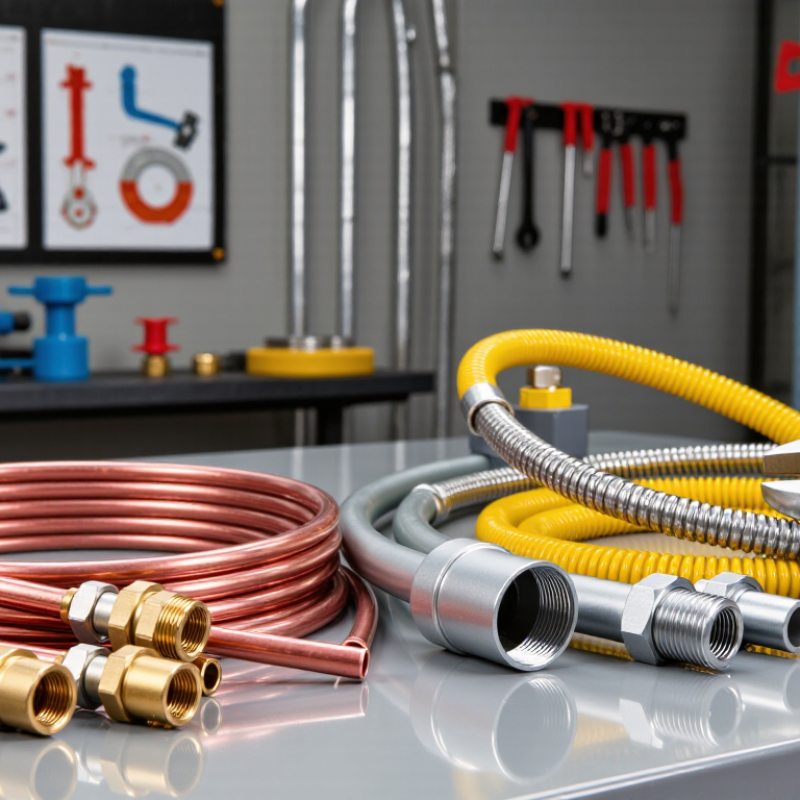
For indoor appliance connections, corrugated stainless-steel tubing offers flexibility around joists and tight cabinet corners. Copper tubing can suit compatible, approved installations where its size and fittings match the appliance. Rigid steel pipe is often chosen for fixed runs that need mechanical protection, though it takes more planning around bends and joints. No material wins everywhere. Check the appliance instructions, working pressure, connection method, and local requirements before choosing.
For larger distribution networks, polyethylene serves buried mains and service lines, while steel remains useful where strength and above-ground exposure matter. PHMSA’s 2023 Gas Distribution Annual Data reports roughly 2.3 million miles of U.S. distribution pipelines, with mileage classified by material. That scale shows why material selection is an infrastructure decision, not merely a tubing preference. It does not identify one best material for every building. A short run behind a range has different heat, movement, and access concerns than a buried service line. Even flexible tubing can be a poor choice if it is kinked, unsupported, or routed too close to heat. Small details matter. I would also avoid treating “stainless” or “copper” as a complete specification; wall thickness, fittings, listing, and installation quality still need review.
Safety Standards and Installation Requirements in 2026
In 2026, the safest gas tubing is the type approved for the appliance, fuel, and local code. There is no universal winner. Black steel, copper, and corrugated stainless steel tubing may each be suitable in specific settings. Check the current rules adopted by your local authority; requirements can differ between regions and building types.
Installation quality matters as much as material. Tubing must be correctly sized for gas demand, run length, and permitted pressure drop. Connections need compatible fittings, and the system must be pressure-tested before use. Keep tubing protected from impact, corrosion, and heat. Where flexible stainless tubing is used, bonding and grounding requirements may apply. Small details matter. A fitting that looks secure may still leak.
Use a qualified gas professional to confirm the material, route, supports, shutoff location, and test procedure. Follow the tubing manufacturer’s installation instructions and local inspection requirements. Do not conceal a line before it has passed the required checks. Even careful planning can miss a local amendment, and that is worth admitting. A brief review before installation can prevent costly rework and reduce the risk of gas leaks.
What Is the Best Type of Gas Tubing in 2026? — Safety Standards and Installation Requirements
There is no single best gas-piping material for every building. The appropriate choice depends on the fuel, location, system design, locally adopted code, and approval by the authority having jurisdiction.
| Piping or Tubing Type |
Common Application |
Key Advantages |
Important Limitations and Safety Requirements |
Overall Suitability |
| Black steel pipe |
Interior gas distribution in residential and commercial buildings. |
Rigid, durable, widely used, and suitable for many above-ground installations when correctly sized and installed. |
Requires properly made threaded or approved joined connections, support, corrosion protection where required, and leak testing. Routing and joint requirements depend on the adopted code. |
A common choice for fixed interior piping when approved by local code and correctly designed. |
| Corrugated stainless steel tubing (CSST) |
Flexible interior gas distribution, often routed through buildings with fewer rigid-pipe joints. |
Flexible routing can reduce the number of fittings and simplify some installations. |
Use only listed tubing and compatible fittings installed according to the manufacturer’s instructions. Protect against physical damage and follow applicable bonding and grounding requirements. Requirements vary by code and product listing. |
A suitable option where the product is listed and the installation meets local requirements; installation should be performed by a qualified professional. |
| Copper tubing |
Gas distribution in locations and applications where the adopted code permits it. |
Lightweight and comparatively easy to route in approved installations. |
Acceptance can depend on the fuel, local code, and site conditions. Some jurisdictions or fuel-gas applications restrict its use. Use only permitted tubing, fittings, and joining methods. |
Potentially appropriate only after confirming that the fuel and local code allow it. |
| Polyethylene (PE) gas pipe |
Buried outdoor gas service or distribution where specifically approved. |
Resistant to many soil-corrosion conditions and commonly used for underground gas piping. |
Generally intended for approved underground use, not exposed indoor piping. Installation may require approved fusion joints, protection at transitions, proper burial, and a locating or tracer wire as required by code and utility rules. |
A common underground option when approved and installed by qualified personnel under applicable requirements. |
| Flexible appliance connector |
Final connection between an approved gas outlet and a movable or stationary appliance, as permitted. |
Allows an appliance to be connected or moved for servicing without using rigid pipe at the appliance connection. |
Not a substitute for a building’s distribution piping. Use a connector listed for the application, fuel, and appliance; do not conceal it in walls, floors, or ceilings unless specifically permitted. Follow length, routing, and shutoff requirements. |
Appropriate only for the final appliance connection where permitted—not as general gas tubing. |
How to Choose the Right Gas Tubing for a Specific Use
Choosing gas tubing starts with the fuel, operating pressure, route, and installation environment. Natural gas and propane systems may have different requirements, so never assume one material fits both. Check appliance instructions and applicable local rules before selecting a tube. Small details matter.
Copper tubing can work in approved applications, but suitability depends on fuel, fittings, exposure, and local requirements. Stainless steel offers strength and corrosion resistance in demanding settings. Corrugated stainless steel tubing can navigate tight routes with fewer joints, yet it needs correct sizing and compatible fittings. A flexible connector is not automatically a substitute for a complete gas line. Fit matters, too.
The right choice depends on flow demand, not just pipe diameter. An undersized line can weaken a range flame or affect equipment performance. Have a qualified gas professional verify sizing, pressure, connections, and leak testing. I would not choose by price alone; that shortcut can age badly. One awkward truth: product tables simplify decisions, while real routes rarely look neat. Take a clear photo and sketch the route before buying materials.