







Blog 
7 Tips for Buying Fire Hoses Globally?
Buying fire hoses across borders is more demanding than comparing prices on a supplier’s website. A hose that performs well in a warehouse may fail in a high-rise system, a marine environment, or severe cold. The right choice depends on pressure, flow rate, diameter, length, lining, jacket material, and coupling compatibility. Small details matter.
Real procurement experience shows that documentation can be as important as the hose itself. Ask for current test reports, traceable batch information, material specifications, and clear maintenance guidance. Confirm whether the fire hoses meet the standards accepted by the destination country and the requirements of the intended facility. Local fire authorities, insurers, and qualified engineers may provide essential direction. Never assume one certificate is accepted everywhere.
Shipping also deserves close attention. Moisture, heat, compression, and poor packaging can damage hoses before installation. Check delivery terms, spare parts, warranty coverage, and after-sales support before payment. A low quotation can become expensive when couplings do not fit or replacement sections arrive months later. That happens.
The following seven tips offer a practical framework for global purchasing. They cover application assessment, supplier verification, technical checks, testing, logistics, cost evaluation, and long-term care. Some recommendations may need adjustment for your site. That is normal. A careful review, supported by qualified professionals, creates a safer and more reliable buying decision than a rushed order.
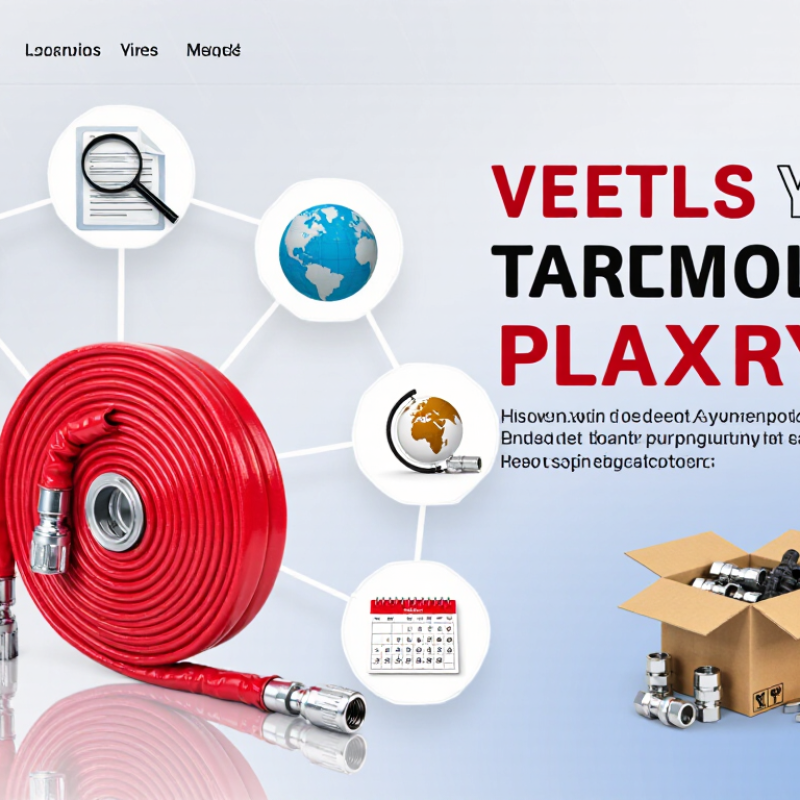
Define Fire Hose Requirements and Intended Applications
Before buying fire hoses globally, define the exact work they must perform. A hose for indoor building protection differs from one used on industrial sites, ships, or emergency vehicles. Identify the water source, expected flow rate, operating pressure, and maximum pressure. Measure twice.
Choose the correct diameter and length for the equipment, access routes, and storage space. A larger hose can deliver more water, but it may become difficult to carry or deploy. Check the hose lining against clean water, saltwater, foam solutions, or other approved agents. Temperature also matters, especially near heated machinery or freezing environments. Details matter.
Specify coupling type, thread compatibility, bend radius, abrasion resistance, and required testing records. Regional authorities may require particular performance certificates, markings, or inspection procedures, so confirm these requirements before purchase. From practical evaluations, a hose can meet pressure ratings yet fail because its couplings do not fit the existing system. That mistake is easy to overlook. Ask suppliers for test data, material details, service guidance, and traceable quality documents. Avoid relying on a product photograph or a generic catalogue description. A neat spreadsheet can still hide a poor assumption, particularly when local water conditions and operator strength are ignored. Consider who will lift, connect, drain, and store the hose during a real emergency.
7 Tips for Buying Fire Hoses Globally? - Define Fire Hose Requirements and Intended Applications
| Tip | Requirement to Define | Typical Application | Representative Data | Important Verification |
|---|---|---|---|---|
| 1. Define the intended application | Identify whether the hose is for firefighting attack, hydrant delivery, fire brigade reels, fixed installations, foam systems, or water suction. | Portable fire engines, indoor hose cabinets, outdoor hydrants, industrial fire systems, and water supply from open sources. | Attack and delivery hoses are generally flexible pressure hoses; suction hoses are reinforced to resist collapse under vacuum; reel hoses are commonly semi-rigid. | Do not use a general-purpose water hose where a certified fire hose or suction hose is required. |
| 2. Select the correct diameter and length | Match internal diameter to required flow, available pump pressure, nozzle connection, storage space, and expected deployment distance. | Small-diameter attack lines, medium-diameter hydrant lines, and larger supply lines for high-flow water transfer. | Common nominal sizes include 25, 38, 45, 52, 65, 75, and 100 mm. Common hose lengths include 15 m and 20 m, although local fire services may use other lengths. | Confirm nominal diameter, actual inside diameter, coupling size, lay-flat dimensions, packed length, and minimum bend radius. |
| 3. Specify pressure ratings correctly | Define working pressure, proof or test pressure, and burst pressure separately. Include pump pressure, elevation, friction loss, and possible water hammer. | Municipal hydrant supply, high-rise firefighting, industrial fire protection, and pump discharge systems. | Many professional fire hoses are available with working-pressure classes around 1.0 to 1.6 MPa, but the correct rating must be selected from the certified product specification and system design. | Never treat burst pressure as an operating pressure. Check the complete hose-and-coupling assembly, not only the hose tube. |
| 4. Choose construction for the environment | Assess abrasion, heat, flame exposure, oils, chemicals, ultraviolet radiation, freezing temperatures, and contact with sharp surfaces. | Urban response, marine facilities, petrochemical sites, construction areas, forests, warehouses, and cold climates. | Typical constructions include synthetic woven jackets with elastomeric or thermoplastic linings. Ribbed or reinforced covers can improve abrasion resistance, while low-temperature flexibility depends on the compound and test temperature. | Request documented resistance data for abrasion, heat, ozone, oil, chemicals, and low temperature when these hazards are present. |
| 5. Ensure coupling and connection compatibility | Specify coupling type, nominal size, material, thread or lug pattern, gasket dimensions, and connection standard before ordering. | Connection to hydrants, pumps, branch pipes, nozzles, manifolds, and hose reels. | International systems may use different coupling arrangements, including threaded, instantaneous, storz-type, or other locally standardized connections. A 65 mm hose does not automatically fit every 65 mm connection. | Confirm dimensional drawings, thread specifications, coupling orientation, gasket material, and pressure rating of the assembled connection. |
| 6. Check applicable standards and testing | Identify the regulations and certification requirements of the destination country, end user, insurer, and authority having jurisdiction. | Fire brigades, commercial buildings, industrial plants, marine installations, public infrastructure, and fixed fire systems. | Depending on the market and application, relevant references may include NFPA 1961 where adopted, EN 14540 for certain non-percolating layflat hoses, EN 694 for semi-rigid reel hoses, BS 6391 for certain delivery hoses, or ISO 14557 for suction hoses. | Ask for current test reports, traceability records, batch identification, hydrostatic test results, and the exact standard edition used for certification. |
| 7. Plan inspection, storage, and lifecycle requirements | Define cleaning, drying, inspection, pressure testing, repair, replacement, storage temperature, and spare-hose requirements. | Emergency fleets, fire stations, industrial maintenance programs, hose cabinets, and long-distance export supply. | Hose service life depends on use, exposure, maintenance, and inspection results. Hoses should be stored clean, dry, protected from sunlight and chemicals, and free from sharp folds or excessive compression. | Request maintenance instructions, recommended inspection intervals, repair limitations, spare-part availability, packaging details, and replacement identification markings. |
Note: Dimensions, pressure classes, and standards shown are representative examples. Final selection should be based on the local code, certified product data, hydraulic calculations, and the requirements of the authority having jurisdiction.
Related Posts
-
Why Are Fire Hoses Essential for Industrial Safety?
-
Why Choosing the Right Fire Hose Garden Hose Can Improve Your Watering Efficiency by Up to 30%
-
2025 Top 10 Fire Hoses for Every Emergency Response Need
-

Why Are Fire Hoses Essential for Effective Fire Safety and Emergency Response
-
What is a Fire Hose and How Does It Work?
-
Why Choose Used Fire Hose for Your Business Needs?