






Blog 
2026 Best 4 Inch Fire Hose for Global Buyers?
Choosing the best 4 fire hose for global buyers in 2026 requires more than comparing price, length, and advertised pressure.
NFPA’s Fire Loss in the United States During 2023 reported approximately 1.39 million fires and 3,670 civilian fire deaths. Property damage reached about $23.3 billion. These figures show why hose reliability is a safety decision, not merely a purchasing preference.
A 4-inch hose can deliver substantial water volume for industrial sites, municipal systems, tankers, and large-scale firefighting operations. However, diameter alone does not guarantee performance. Buyers should examine working pressure, burst pressure, coupling quality, abrasion resistance, bend radius, lining material, and chemical compatibility. NFPA 1961 provides recognized requirements for fire hose design and testing in relevant applications. UL 19 and EN 14540 may also influence product acceptance, depending on the destination market and intended use.
Field conditions reveal practical differences. A hose dragged across concrete needs a tougher jacket. A hose stored in a humid container needs careful mildew control. Couplings must connect securely, even when gloves are wet and visibility is poor.
No single product wins everywhere.
Global buyers should also verify traceable test records, factory quality systems, inspection procedures, and after-sales support. Reports from organizations such as NFPA offer valuable risk data, but they do not replace application-specific testing. That assumption deserves reconsideration.
This guide compares major 4-inch hose options for 2026, focusing on measurable performance, compliance expectations, lifecycle value, and real-world handling. Cost matters. Failure costs more.
What Is a 4-Inch Fire Hose and Where Is It Used?
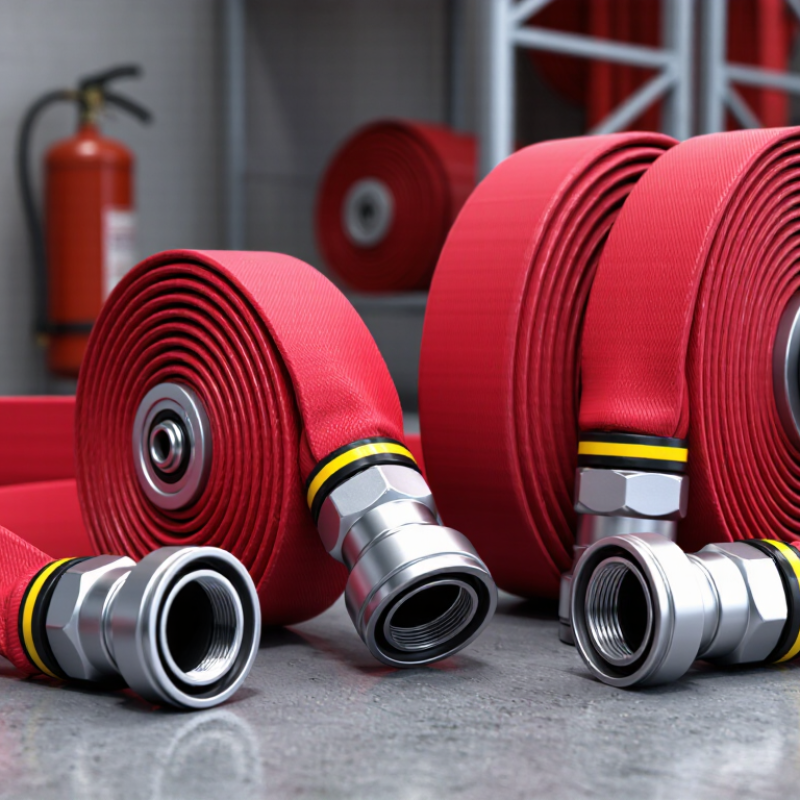
A 4-inch fire hose has a nominal inside diameter of about 102 millimeters. It moves large water volumes with lower friction loss than smaller attack lines. Fire departments commonly use it as a supply line between hydrants, pumps, water tenders, and portable tanks. Industrial sites may use it for foam solution, emergency cooling, or long-distance water transfer. It is not automatically suitable for direct hand attack. Its weight becomes difficult when charged.
The required flow depends on pressure, hose length, lining, couplings, and elevation. A 4-inch line may deliver roughly 1,000 to 2,000 gallons per minute in suitable systems, but buyers should never treat this range as a guaranteed rating. NFPA 1961 provides performance and testing requirements for fire hose. NFPA’s Fire Loss in the United States During 2023 estimated 1,388,500 fires and 3,670 civilian fire deaths. These figures show why dependable water delivery still matters. They do not prove that every large hose is appropriate.
Tips: Check the working pressure, test pressure, coupling material, and temperature range. Ask for factory test records. Confirm compatibility with local hydrants and pump threads. A smaller hose can sometimes perform better in restricted access areas. This point is often overlooked. For global buyers, verify diameter tolerance, abrasion resistance, storage limits, and recognized test documentation before comparing prices.
Key Specifications for Comparing 4-Inch Fire Hoses
A 4-inch fire hose is selected by performance, not diameter alone. The stated size is nominal; measure the actual internal diameter before comparing flow data. NFPA 1960:2024 identifies requirements for fire hose construction, testing, markings, and service use. Buyers should request documented working pressure, proof-test pressure, and burst-test results. Do not rely on a catalog headline.
Flow capacity also depends on lining smoothness, hose length, elevation, and coupling design. NFPA fire-flow calculations commonly use the Hazen-Williams method for friction loss. A larger hose can deliver substantial volume, but poor couplings may create turbulence and pressure loss. Check the manufacturer’s friction-loss table at the intended flow rate. Real installations often differ from laboratory figures.
Weight matters during deployment. A wet 4-inch hose can become difficult for two workers to move across a concrete floor. Compare dry weight, bend radius, minimum temperature, abrasion resistance, and folding behavior. ISO 14557 provides relevant requirements for certain fire-fighting hoses and assemblies, while FM Global Data Sheet 3-26 can support water-demand and fire-protection planning. Certification scope still needs careful review. A hose may meet one standard but not the installation authority’s requirements. I would also verify coupling compatibility, because “standard” fittings are not always interchangeable globally. Field inspection records are valuable. Sometimes the missing detail is the most important one.
How to Evaluate Hose Materials, Construction, and Performance
A 4-inch fire hose must match the demands of its operating environment, not just a catalog specification. For global buyers, material selection is critical. Synthetic jackets are usually lighter and dry faster, while rubber-lined designs can offer strong resistance to water, chemicals, and repeated use. Check the liner for smoothness and uniform thickness. Small bubbles or uneven areas may become weak points under pressure.
Construction deserves close inspection. Look for tightly woven reinforcement, secure stitching, and couplings that fit the local connection system. A hose may pass a factory test yet perform poorly after sharp bends, dragging, or long storage. I have found that excessive weight can slow deployment. That assumption deserves reconsideration. A balanced hose is often more practical than the heaviest option.
Tips: Request test records for working pressure, burst pressure, abrasion, and temperature resistance. Confirm the hose diameter under pressure, not only its nominal size. Inspect sample couplings by hand. They should seat firmly without forcing. Check local certification requirements before purchase, because approval rules differ between markets. Store the hose clean, dry, and away from direct sunlight. Even good materials deteriorate when maintenance is ignored. Evaluate replacement parts and repair support as well. A low purchase price can become expensive after one damaged section.
Global Standards, Certifications, and Compliance Requirements
For global buyers, a 4 inch fire hose must satisfy more than a diameter check. Its actual bore is usually close to 100 millimetres, but coupling design, working pressure, and test methods vary by market. In North America, buyers should review the current NFPA 1960 requirements for fire hose, couplings, and related equipment. European projects may require EN 14540 for non-percolating layflat hoses, while other regions may reference ISO-based specifications. The correct standard depends on the fire system, not only the destination country.
Documentation matters. Ask for batch traceability, dimensional records, hydrostatic test results, abrasion testing, and coupling compatibility data. A certificate alone is not proof. The NFPA report Fire Loss in the United States During 2022 recorded about 1.50 million fires and 3,790 civilian fire deaths. Such figures show why verified performance cannot be treated as paperwork. Hose assemblies should also be checked against local installation rules, water pressure, storage temperature, and inspection intervals. Small details matter.
Field experience exposes gaps.
A hose rated for high pressure may still fail at a damaged coupling or sharp bend. Buyers should request test pressures, proof-test duration, lining material, and minimum bend radius. They should also confirm whether certification covers the complete assembly or only the hose tube. This distinction is often missed. Standards evolve, and local authorities may interpret them differently. An independent conformity assessment can reduce uncertainty, but it does not replace practical inspection and realistic flow testing. (NFPA, Fire Loss in the United States During 2022)
2026 Best 4-Inch Fire Hose for Global Buyers
Global standards, certification references, and compliance scope for selecting a nominal 4-inch fire hose.
Reference families: EN 14540, DIN 14811, BS 336, ISO 14557, and NFPA 1960. Always verify the latest edition and the end-user authority’s requirements before purchase.
How to Select the Best 4-Inch Fire Hose for Your Market
A 4-inch fire hose is not automatically suitable for every market. NFPA’s Fire Loss in the United States During 2023 estimated 1.39 million fires and $23.1 billion in direct property damage. These figures show why hose selection requires risk-based evaluation, not simple price comparison. Start with the local standard, connection system, and required flow rate. Confirm whether the stated diameter is nominal or internal. A small difference can affect pump performance.
Check working pressure, burst pressure, temperature range, abrasion resistance, and bend radius. Coastal markets need stronger protection against salt and humidity. Hot regions may require better ultraviolet and heat resistance. Industrial sites often need thicker covers and improved chemical resistance. Verify coupling compatibility before ordering. It is a costly mistake.
NFPA 1961 provides recognized requirements for fire hose design, testing, and service performance. European buyers may also require conformity with applicable EN standards and documented factory testing. Ask for batch traceability, pressure-test records, lining information, and inspection instructions. A hose should remain manageable when wet, not only strong in a laboratory. Weight matters during deployment.
Field conditions often expose weaknesses that brochures hide. I would request sample testing with the buyer’s pump and couplings. That step may slow procurement, but it reveals leakage, stiffness, and fitting problems early. Selecting the cheapest hose can be reasonable for low-risk use, but only after checking its full service life.
2026 Best 4 Inch Fire Hose for Global Buyers? - How to Select the Best 4-Inch Fire Hose for Your Market
| Data Category | Selection Dimension | Typical 4-Inch Hose Data | Market Selection Guidance |
|---|---|---|---|
| Size | Nominal diameter | 4 in nominal size; approximately 100 mm internal diameter. Actual internal diameter may vary by construction and tolerance. | Confirm whether the local market specifies nominal inches, DN100, or an exact internal diameter before ordering. |
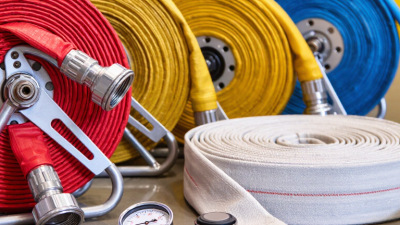
| Construction | Common hose structure | Woven synthetic textile reinforcement with an elastomeric or thermoplastic lining. Some heavy-duty designs include an external abrasion-resistant cover. | Choose a lightweight layflat design for rapid deployment, or a covered/heavy-duty design for dragging over concrete, gravel, or industrial floors. |
| Pressure | Typical working-pressure range | Approximately 10–20 bar (145–290 psi), depending on reinforcement, lining, coupling, and certification. | Do not select by hose pressure alone. The complete assembly must be rated for the required operating pressure, including couplings and clamps. |
| Pressure | Hydrostatic test pressure | Often approximately 1.5 times the stated working pressure, subject to the applicable product standard and purchaser specification. | Request the manufacturer’s test procedure, test pressure, test duration, and batch test records for project or public-sector purchases. |
| Pressure | Burst-pressure margin | Many industrial fire-hose designs provide a burst pressure of roughly 3–4 times working pressure, but the actual ratio is product-specific. | Use the published burst pressure only as a safety reference; it must not be treated as an allowable operating pressure. |
| Flow | Indicative flow velocity | For a 100 mm internal diameter, approximately 1,000 L/min produces about 2.1 m/s; 2,000 L/min about 4.2 m/s; and 3,000 L/min about 6.4 m/s. | Verify pump capacity, friction loss, elevation, nozzle demand, and hose length. Actual flow depends on the entire hydraulic system. |
| Length | Common supply lengths | 15 m, 20 m, 30 m, and 50 m are commonly specified; custom lengths may be available. | Select the shortest practical length for easier handling, lower friction loss, and reduced storage volume. Confirm local deployment practices. |
| Weight | Approximate hose-only weight | Often about 0.8–1.8 kg/m when dry, depending on wall thickness, reinforcement, cover, and pressure rating. Couplings add additional weight. | For portable fire brigades, compare weight per metre and weight per complete coupled length rather than hose-only weight. |
| Couplings | Connection options | Common options include threaded, instantaneous, storz-type, and other region-specific coupling systems. Connection dimensions are not universally interchangeable. | Specify coupling type, material, size, sealing method, and assembly method. Always match the existing pump, hydrant, manifold, and nozzle connections. |
| Lining | Fluid compatibility | Water service is standard. Some linings support foam solutions, seawater, or selected chemicals, but compatibility depends on concentration and temperature. | For seawater, foam, or chemical exposure, obtain written compatibility confirmation for the lining, cover, adhesive, and coupling seals. |
| Temperature | Typical service-temperature range | Many products are designed for approximately −20°C to +60°C water-service conditions, but the approved range varies by lining and construction. | Check minimum and maximum service temperatures for cold climates, hot warehouses, fireground heat, and transport conditions. |
| Durability | Abrasion and weather resistance | Synthetic jackets generally provide good strength-to-weight performance. External covers improve abrasion resistance but may increase weight and cost. | Use a reinforced cover for mining, construction, oil and gas, forestry, and municipal applications involving frequent dragging or rough surfaces. |
| Maintenance | Cleaning and drying requirement | After use, the hose should normally be flushed with clean water, drained, dried thoroughly, inspected, and stored away from sunlight and heat. | A hose-management procedure is essential because trapped moisture, mildew, chemicals, and incorrect storage can shorten service life. |
| Compliance | Applicable standards and approvals | Requirements may reference standards such as NFPA, EN, ISO, marine rules, or national fire-service specifications. The applicable edition depends on the destination market. | Ask for the exact standard number and edition, scope of certification, pressure class, test reports, and traceability documents before purchase. |
| Traceability | Marking and identification | Useful markings include nominal size, working pressure, manufacturing date or batch, standard reference, length, and inspection information. | Require permanent, legible markings that remain visible during inspection and can be matched to delivery documents. |
| Procurement | Recommended purchasing specification | State diameter, length, construction, lining, working pressure, test pressure, coupling type, fluid, temperature range, standard, and quantity. | A complete technical specification prevents substitution with a lower-rated hose that has the same nominal diameter but different performance. |
Note: The numerical ranges above are typical market reference values for 4-inch fire-hose products, not universal requirements. Final selection should be based on the applicable local standard, certified product documentation, hydraulic calculations, and the requirements of the complete fire-fighting system.
Related Posts
-
China Best Fire Hoses for Global Wholesale Buyers?
-
Top 10 Differences Between Fire Hose and Garden Hose
-
How to Choose the Best 4 Fire Hose for Your Needs?
-
2025 Top 10 Fire Hoses for Every Emergency Response Need
-

How to Choose the Best Fire Hose Manufacturers for Your Needs?
-
Top 10 Fire Hose and Garden Hose Manufacturers